
What Does a TRILLION Look Like?
A trillion is so big it's difficult to imagine. Let's start with something small enough to hold in your hand: a bean!
Explore: A Bushel of Beans
Imagine a wooden bushel basket overflowing with dried pinto beans.
There are thousands upon thousands of beans in that one basket. It certainly looks like a whole lot!
But here's the question: How many beans would it take to make a TRILLION?
And how could we possibly picture a number that big?
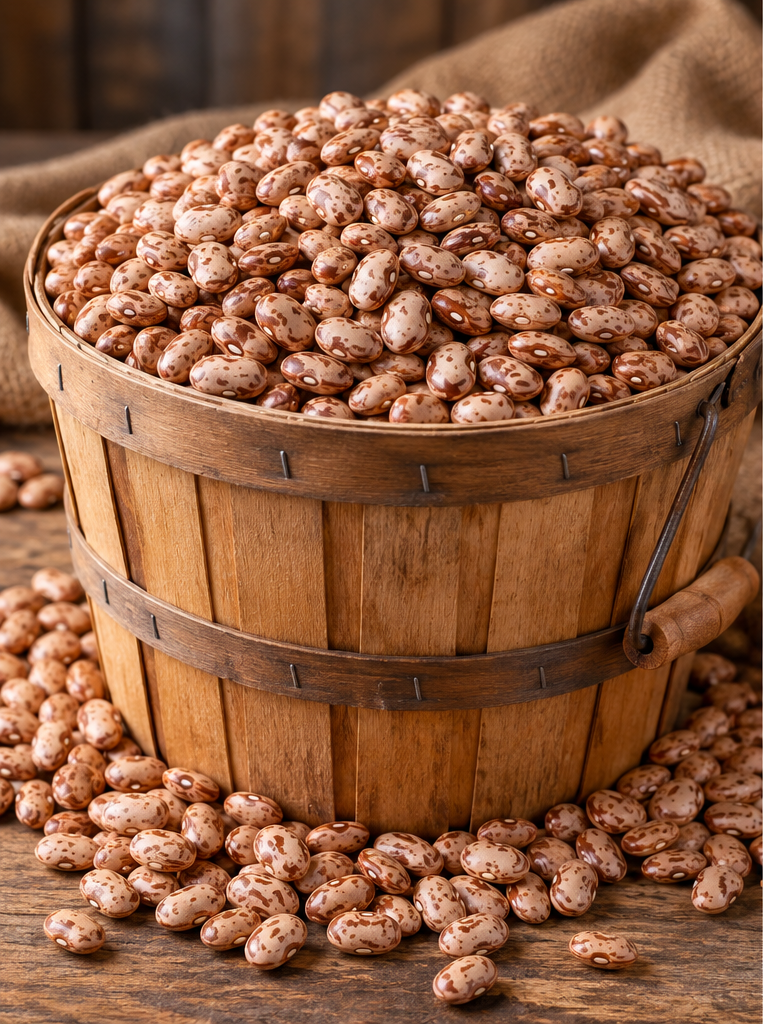
One trillion is 1,000,000,000,000. That's one thousand billions!
Discover: Three Ways to Picture a Trillion
Suppose each dried pinto bean weighs about half a gram. Here are three surprising ways to imagine one trillion beans.
Approximately that many five-pound bags of beans.
If those bags were lined up end to end at 18 inches each, they'd circle Earth's equator about two and a half times.
About how long it would take to count one bean every second, without stopping.
How we estimated: At about 0.5 gram per bean, a five-pound bag holds roughly 4,536 beans. One trillion beans would fill about 220 million bags. The Earth comparison assumes each bag takes 18 inches in a line. Actual bean sizes and packaging vary, so these are illustrative estimates, not precise measurements.
Pause and imagine: If you started counting beans when the earliest human civilizations were forming, you still wouldn't be anywhere near finished today!
Connect: A Trillion-Sized Surprise Inside You!
Now that you've begun to imagine how enormous one trillion is, here's the connection:
Your body contains roughly 30 trillion cells!
That's about 30 times the number of beans in our trillion-bean example.
And each of those tiny living cells is part of the extraordinary team that makes YOU possible.
Different cells have different jobs, but they work together every moment of your life.
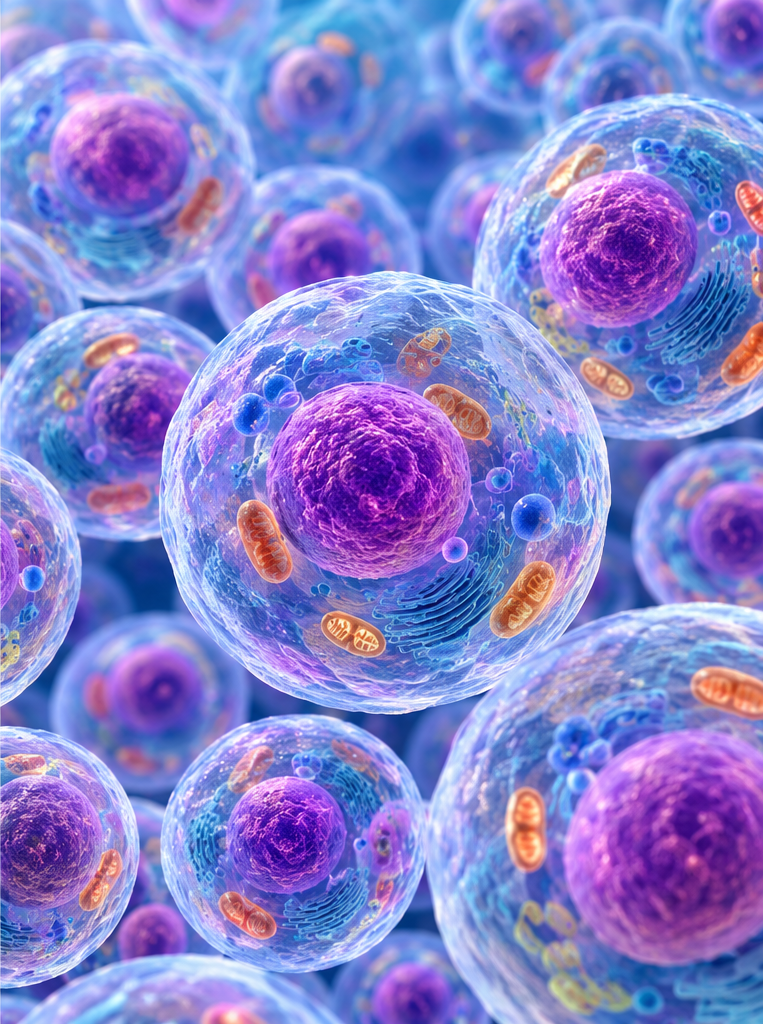
A trillion beans is almost impossible to picture. Your body contains tens of trillions of living cells—and they work together to make you YOU!
The roughly 30-trillion-cell figure is an estimate for a reference adult. Actual cell counts vary with age, body size, and other factors. The illustration is not to scale.
How Many Beans in a Bushel?
A bushel is a measure of volume. For this activity, imagine a bushel of dried pinto beans weighing about 60 pounds, with each bean weighing approximately half a gram.
Which estimate is closest?
▶ Tap to reveal the answer!
D) 50,000 is closest!
27,216 ÷ 0.5 ≈ 54,400 beans
That's tens of thousands of beans in just one basket. And even that enormous-looking basket is nowhere near a trillion!
This is an estimation exercise. A bushel measures volume, and its weight depends on the beans and how they're packed.
The FREE Trillion Bean Discovery Challenge
Can you use a small handful of beans to estimate a much bigger amount? Count, group, weigh, and scale up from hundreds to thousands, millions, billions—and finally a trillion.
Free printable · No email required
Coming soon: The printable is being prepared. The download button will appear here once the PDF is uploaded.
🫘 Take the Connection With You!
Next time you see a bag of beans at the grocery store, ask someone:
“How many bags do you think it would take to make a trillion beans?”
Then share the surprise: your body is made of roughly 30 trillion tiny living cells!
What other everyday things could help us understand numbers too big to see?
One More Amazing Connection
A single bean is easy to hold. A single cell is usually too small to see without a microscope. But when you start thinking about trillions, both become part of an incredible story about scale.
That's the idea behind The City Inside You: using familiar things to discover the extraordinary systems working inside living cells.
Sources & Further Discovery
- National Institute of Standards and Technology (NIST). Metric unit relationships used in the mass estimates. Explore SI units of mass.
- National Oceanic and Atmospheric Administration (NOAA). Earth's equatorial circumference is approximately 40,075 km; used for the bag-line comparison. Learn about Earth's shape.
- Sender, R., Fuchs, S., & Milo, R. (2016). “Revised Estimates for the Number of Human and Bacteria Cells in the Body.” PLOS Biology. Read the research.
- Hatton, I. A., et al. (2023). “The human cell count and size distribution.” PNAS. Read the research.
- Curious Connections calculation notes. Assumed bean mass: 0.5 g; bag mass: 5 lb; bag length in line: 18 in; counting rate: one bean/second; assumed bushel weight for activity: 60 lb. All comparisons are approximate.